
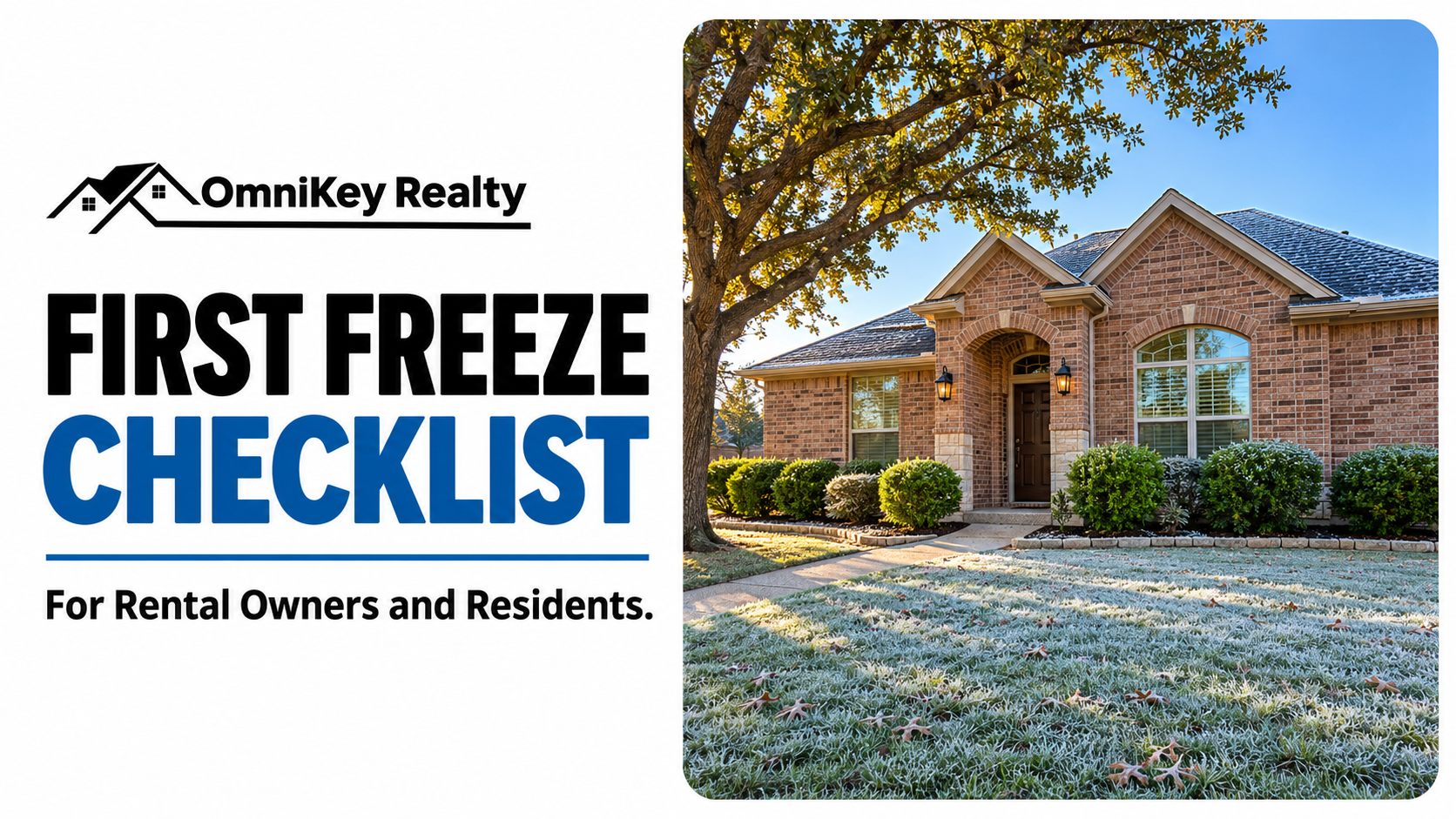
In North Texas, plenty of winter days are mild enough that it's easy to forget about the pipes. Then a hard freeze shows up in the forecast, and everyone is hunting for faucet covers on the same afternoon.
A frozen pipe is more than an inconvenience. The American Red Cross explains why: water expands as it freezes, and that pressure can break metal or plastic pipes no matter how strong they are. A break can mean water damage, a repair bill, and a home that isn't livable for a while. A little preparation before the cold arrives can lower the odds of that happening.
Know which pipes are most at risk
According to the Red Cross, the pipes that freeze most often are:
- Pipes exposed to severe cold, like outdoor hose bibs, swimming pool supply lines, and sprinkler lines.
- Supply lines in unheated areas such as attics, garages, crawl spaces, and kitchen cabinets.
- Pipes along exterior walls with little or no insulation.
Walk the home with that list in mind. You'll usually find two or three spots that deserve extra attention.
What owners can do now
- Drain and protect outdoor lines. Drain sprinkler and pool supply lines following the manufacturer's or installer's directions. Disconnect and store hoses. If the home has an inside valve for an outdoor faucet, close it and open the outside faucet so it can drain.
- Insulate exposed pipes. Pipe sleeves or UL-listed heat tape can protect vulnerable lines in garages, attics, and under sinks.
- Make the main water shut-off easy to find. If a pipe does break, the first few minutes matter. Residents should know where the shut-off is and be able to reach it.
- Send residents a reminder before the forecast turns. A short note now beats an emergency call at 2 a.m.
What residents can do when it gets very cold
The Red Cross recommends:
- Keep garage doors closed if there are water lines in the garage.
- Open kitchen and bathroom cabinet doors so warmer air can reach the plumbing, and move cleaners up out of children's reach.
- Let cold water drip from a faucet served by exposed pipes. Even a trickle helps.
- Keep the thermostat at the same temperature day and night.
- If you'll be away, leave the heat on, set no lower than 55°F.
Check your lease too. Many leases spell out what residents are expected to do in freezing weather and how to report a problem.
If a pipe freezes anyway
Residents, if you suspect a frozen pipe, report it right away, the way your lease says to. Owners, respond fast, even if the plumber can't get there for a few hours. A frozen pipe caught early is far cheaper than a burst one.
If you turn on a faucet and only a trickle comes out, suspect a frozen pipe. Keep the faucet open and apply gentle heat with a hair dryer, an electric heating pad, or towels soaked in hot water. Never use an open flame, a blowtorch, or a kerosene or propane heater. If you can't find the frozen section or can't thaw it, call a licensed plumber. Then check the other faucets, because if one pipe froze, others may have too.
The takeaway
Freeze prep is cheap, and freeze damage is not. An hour of work in November helps protect both the home and the people living in it.
Want help getting a rental ready for winter? Talk with OmniKey Realty at 972-480-8280 or management@omnikeytexas.com.
