
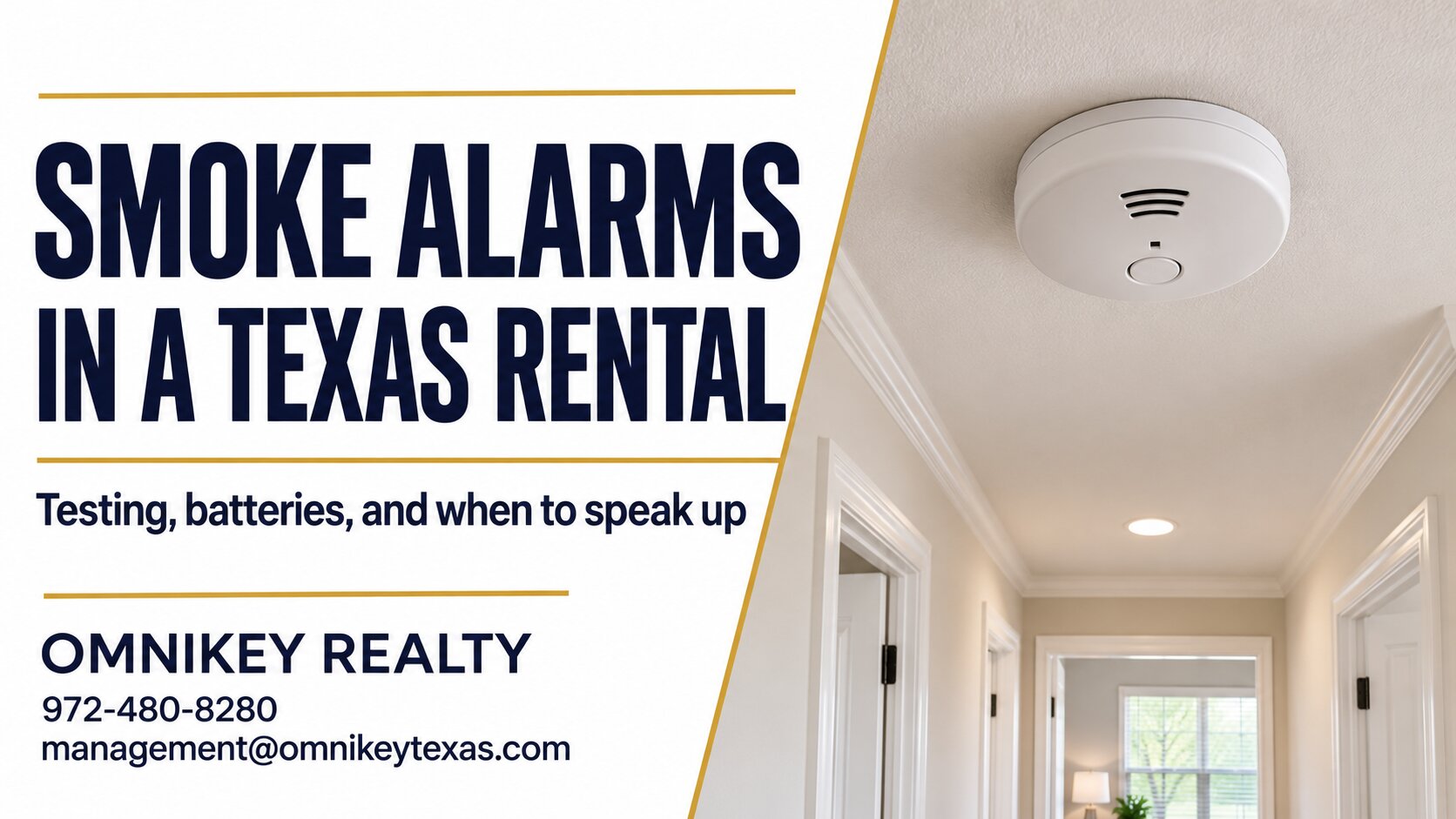
Heating season is a good time to look up at the ceiling. A smoke alarm is one of the cheapest safety devices in a home, and the U.S. Fire Administration puts it plainly: a smoke alarm with a dead or missing battery is the same as having no smoke alarm at all.
In a rental, there's a second question: who is responsible for what? Texas law answers a lot of it, and knowing the answer helps owners and residents both.
Where the alarms go
Under the Texas Property Code, a landlord has to install at least one smoke alarm in each separate bedroom. If several bedrooms share a hallway, there must also be one in that hallway near the bedrooms. If the home has more than one level, each level needs at least one.
What the owner does
The landlord has to confirm each smoke alarm is in good working order at the beginning of the resident's possession, by testing it with the test button, with smoke, or by the manufacturer's recommended method.
During the lease, the landlord's duty to inspect and repair kicks in when the resident reports a malfunction or asks for an inspection or repair. The landlord then has to take care of it within a reasonable time.
Two details owners should know:
- If the alarm worked when the resident moved in, the landlord isn't required to keep supplying batteries for a battery-operated alarm after move-in.
- If the resident, a family member or a guest damages the alarm, the landlord's duty to repair or replace it applies when the resident pays the reasonable cost in advance.
A written lease can also require the resident's first request for an inspection or repair to be in writing.
What the resident does
The U.S. Fire Administration recommends testing smoke alarms every month. For alarms that use a 9-volt battery, it recommends replacing the battery at least once a year. Hardwired alarms usually have a backup battery, and the USFA says to replace that at least once a year too.
If an alarm chirps, won't test, or looks damaged, report it the way your lease says to. That request is what starts the landlord's duty to inspect and repair during the lease.
And if the alarm goes off while you're cooking or showering, don't pull the battery. The USFA suggests opening a window or door, pressing the hush button, and waving a towel to clear the air.
One date most people never check
Smoke alarms don't last forever. The USFA says to replace them 10 years from the manufacture date, which is usually printed on the back of the alarm.
Owners, turnover is a natural time to check those dates, test every alarm, and note the results in your move-in records. Residents, if you notice an old or missing alarm, say something.
The takeaway
Owners: test at move-in, document it, and respond quickly when a resident reports a problem. Residents: test monthly, replace batteries as needed, and report anything that isn't working. Either way, a working alarm only helps if someone checks it.
Have questions about safety items in your rental? Talk with OmniKey Realty at 972-480-8280 or management@omnikeytexas.com.
